

Castor oil is a pale yellow vegetable oil cold-pressed from the seeds of Ricinus communis, a plant whose use in skin and hair care dates back thousands of years, including to ancient Egyptian practice. Unlike most botanical oils, castor oil is composed almost entirely of one fatty acid: roughly 90 percent of its composition is ricinoleic acid, a monounsaturated, 18-carbon fatty acid with a hydroxyl group that gives the oil its unusual viscosity and its affinity for the skin. The oil also contains essential fatty acids, vitamin E, proteins, and minerals, and it is valued in cosmetic formulation as an emollient, occlusive, and skin-conditioning agent.
Crucially, castor oil is a carrier oil, not an essential oil. It does not disperse in water, has a heavy texture unsuited to diffusers, and carries a faint, mild seed-like scent rather than an aromatic bouquet. Understanding this distinction is the foundation for using it well.
Massage: Grip, Glide, and Targeted Relief
In massage practice, castor oil’s defining characteristic—its thickness—is both its advantage and its limitation. Because it is viscous and stays where it is applied, castor oil provides excellent “grip” for deep tissue and sports massage, where a therapist needs controlled contact with muscle and fascia rather than a slippery glide. Its anti-inflammatory properties make it a serviceable base for work on arthritic pain, sore muscles, and inflamed joints, and it is also used in localized application on the lower back, shoulders, and knees.
For a relaxing or Swedish-style massage, however, undiluted castor oil is generally too heavy and tacky. The practical recommendation is to blend it 1:1 with a lighter carrier such as sweet almond or jojoba oil, which preserves some of its body and therapeutic value while improving spreadability and absorption. A simple massage blend can be made by combining equal parts castor oil and a lighter carrier, warmed slightly between the palms before application. Castor oil packs—saturated flannel applied over a targeted area for 30 minutes or longer—are a related traditional practice often used before or alongside bodywork.
Skincare: Occlusion, Barrier Support, and a Caution for Acne-Prone Skin
In skincare, castor oil functions primarily as an occlusive and emollient. By forming a physical layer on the skin’s surface, it slows transepidermal water loss and helps the skin retain moisture, making it useful for very dry, rough, or calloused areas such as elbows, heels, and knees. Ricinoleic acid contributes mild anti-inflammatory activity, and castor oil has demonstrated antimicrobial properties in laboratory settings, which has driven interest in its use for blemish-prone skin.
That interest warrants a clear caveat. Castor oil is considered comedogenic for many individuals, meaning it can clog pores and potentially worsen acne rather than improve it. Dermatology guidance suggests that those with oily or acne-prone skin may do better to avoid leaving castor oil on the face overnight, and that it works best when layered over a lighter moisturizer or blended with a less occlusive oil rather than applied neat. For dry skin, a thin layer applied as the final step of an evening routine can help seal in prior products—a practice sometimes called “slugging”.
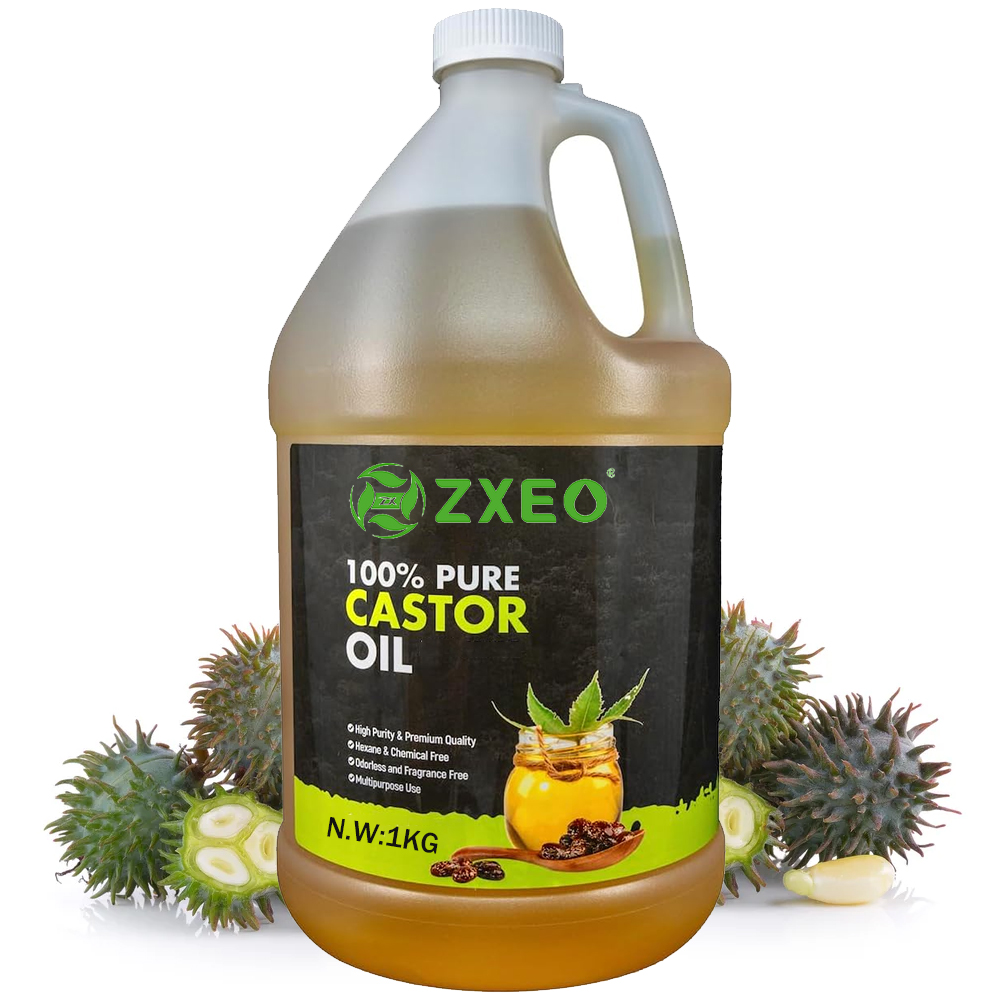
In the oil cleansing method, castor oil is used as the “gripping” component of a blend, paired with a lighter oil to dissolve makeup, sunscreen, and sebum. A common starting point is roughly 30 percent castor oil to 70 percent carrier oil; those with oilier skin may tolerate a higher proportion, while dry skin types often prefer less.
Aromatherapy: A Carrier, Not a Diffuser Oil
Castor oil has no meaningful role as an aromatic diffuser oil. Its molecular structure and heavy consistency mean it does not volatilize into the air, and placing it in a water-based diffuser is ineffective and can damage the device. Where castor oil enters aromatherapy is as a carrier: a fixed oil in which essential oils are diluted for topical application, massage, or a therapeutic roll-on.
For this use, a standard dilution guideline applies: approximately 3–6 drops of essential oil per 20 mL of castor oil yields a 1–1.5 percent dilution, suitable for sensitive areas or initial trials; 4–6 drops per 20 mL is a common recommendation for general massage blending. Because castor oil is thick, some practitioners prefer to combine it with a lighter carrier before adding essential oils, ensuring even dispersion and easier application. Castor oil’s own faint scent does not compete with essential oils, making it a neutral vehicle for blends intended for joint care, scalp massage, or localized skin support.
Mobile:+86-15387961044
Whatsapp: +8618897969621
e-mail: freda@gzzcoil.com
Wechat: +8615387961044
Facebook: 15387961044
Post time: Nov-04-2026