

Frankincense essential oil is steam-distilled from the gum resin of Boswellia species, most commonly Boswellia carterii and Boswellia sacra. Its aroma is warm, woody, and subtly spicy, with a balsamic depth that grows sweeter as it evaporates. The resin’s chemistry is dominated by pentacyclic triterpenes—particularly 11-keto-β-boswellic acid (KBA) and 3-O-acetyl-11-keto-β-boswellic acid (AKBA)—along with monoterpenes and diterpenes that contribute to its characteristic scent and reputed soothing properties. Unlike many floral or citrus oils, frankincense is not bright or immediately effusive; it unfolds slowly, which is part of why it has remained a fixture in meditation and ritual for centuries.
The following sections outline how frankincense oil is commonly used in massage, skincare, and aromatherapy, with practical guidance for dilution and application.
Massage: Easing Aches and Deepening Breath
In massage practice, frankincense is selected for two overlapping purposes: physical comfort and respiratory-emotional settling. Boswellic acid, a signature constituent of the resin, gives the oil an anti-inflammatory action that makes it a candidate for topical blends intended to ease swelling and everyday muscular or joint discomfort. Aromatherapy sources also describe frankincense as an oil that “deepens the breath” and eases feelings of anxiety, which makes it suited to slow, deliberate massage work rather than brisk or invigorating strokes.
For massage, frankincense must be diluted in a carrier oil such as sweet almond, jojoba, or fractionated coconut oil. A commonly cited preparation is 5 drops of frankincense essential oil per 10 mL of carrier oil, roughly a 2.5% dilution. For a more conservative full-body blend, 3 drops per 10 mL—approximately 1.5%—is a reasonable starting point. Those wishing to target areas of tension may blend 2 drops of frankincense with 1 teaspoon of sweet almond oil and apply with gentle circular movements. The oil blends well with sweet orange, lavender, and bergamot, allowing the aromatic profile to be adjusted to individual preference.
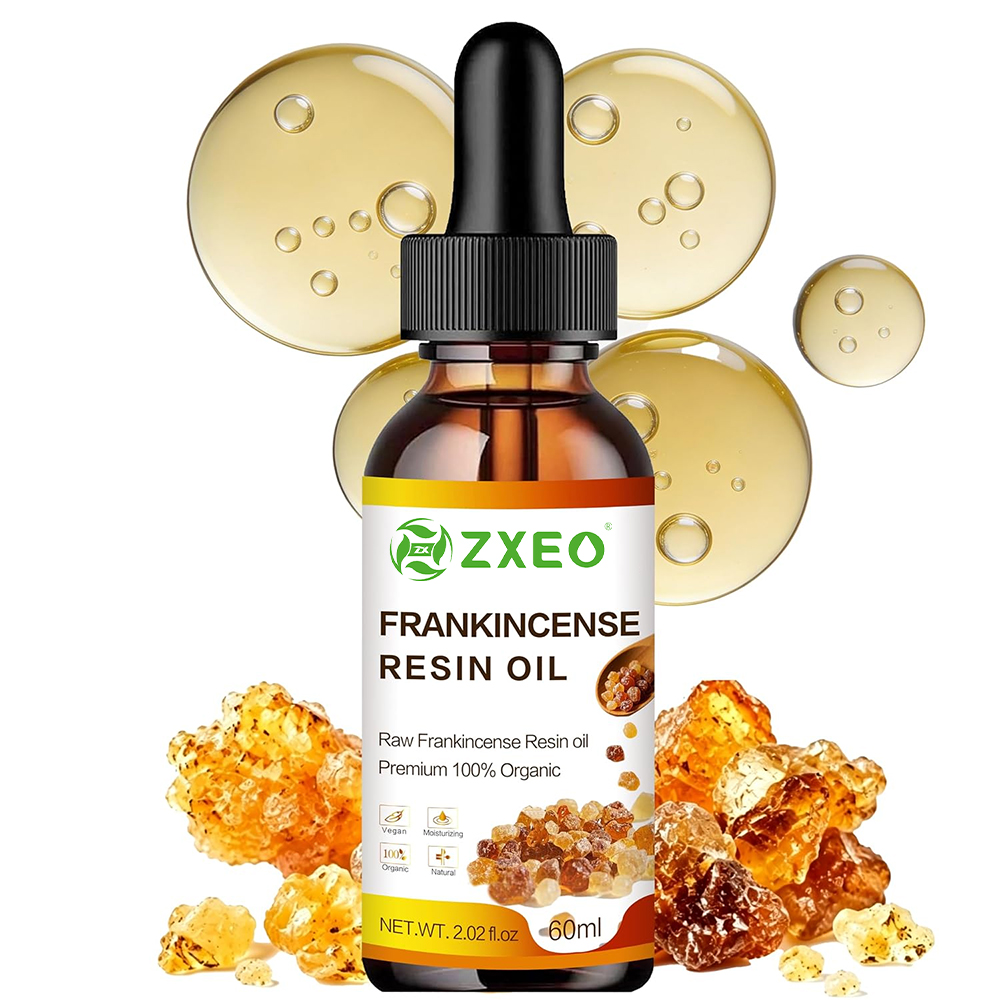
Skincare: Toning, Repair, and Mature Skin Support
Frankincense occupies a well-established place in cosmetic formulation, particularly for mature and dry skin. It is described as stimulating new cell production, preserving skin elasticity, and relieving dry and chapped skin. Its astringent quality gives it an overall toning effect, while boswellic acid contributes anti-inflammatory and skin-healing actions that have made it a popular ingredient in products intended to minimize the appearance of fine lines, scars, and blemishes. Frankincense is also used as an antiseptic topical for minor skin wounds and ulcers, always in diluted form.
For facial care, a low dilution is essential. A 1% blend—approximately 5–6 drops per 30 mL of carrier oil—is appropriate for daily facial use, while 2% is more suitable for body care. A simple facial toner can be made by adding 1–2 drops of frankincense essential oil to 50 mL of water and applying with a cotton pad to cleanse and tighten pores. For a targeted treatment on dry or dull areas, a drop or two diluted in jojoba or argan oil can be dabbed onto the skin as part of an evening routine. A patch test on the inner forearm is advisable before first use, and the oil should be kept away from the eyes and mucous membranes.
Aromatherapy: Calm, Focus, and Meditative Ground
Frankincense is most widely used for its scent, and its aromatic profile is distinct from the sharp lift of citrus or the immediate sweetness of florals. It is described as soothing to the nervous system, capable of both uplifting and calming, and is a popular choice for meditation, prayer, and quiet focus. In diffuser or inhalation use, it is often enlisted to support relaxation and a sense of emotional steadiness rather than stimulation.
For diffuser use, 3–5 drops in a water-based diffuser is a standard starting point, with 6–8 drops suitable for larger rooms or a more pronounced ambient scent. For direct inhalation, 3–5 drops can be added to a bowl of steaming water and the vapor inhaled gently for five to ten minutes. A few drops may also be added to a bath when pre-diluted in a dispersant such as bath oil or milk; a typical bath blend uses 4–6 drops in 20 mL of carrier oil. For meditation, massaging a diluted blend into the temples is a common practice to enhance the ritual quality of the scent.
Responsible Use and Sourcing
Frankincense essential oil is for external use only and should never be ingested. Undiluted application can cause skin irritation, redness, or a burning sensation, and inhaling a strong scent may trigger headache or throat discomfort in sensitive individuals. People with asthma, eczema, or very sensitive skin should exercise particular caution, and the oil should be kept out of reach of children under five years of age.
Pregnancy guidance for frankincense is comparatively favorable among essential oils, but dilution
must be reduced. Tisserand Aromatherapy lists Boswellia carterii as suitable for use from the second trimester onward, at a 1% dilution for topical blends—1 drop of essential oil per 5 mL of carrier oil—or in a room diffuser. Essential oils are generally avoided entirely during the first trimester, and pregnant or nursing individuals should confirm individual guidance with a qualified healthcare practitioner before use.
Consumers should look for frankincense oil that lists the full botanical name (Boswellia carterii, B. sacra, or B. serrata) on the label. Resin quality and distillation practices vary considerably, and reputable suppliers will provide sourcing information. The oil should be stored in a cool, dark place and used within the recommended period after opening.
Frankincense essential oil is not a remedy for disease, and scientific evidence for many traditional claims remains limited or preliminary. What it offers is more modest and more durable: a warm, resinous scent that slows the breath, a diluted touch that tends to dry and mature skin, and a ritual quality that has kept it in use across cultures for millennia. Used with attention to dilution, sourcing, and individual sensitivity, it remains a quietly substantive botanical for massage, skincare, and aromatic practice.
Mobile:+86-15387961044
Whatsapp: +8618897969621
e-mail: freda@gzzcoil.com
Wechat: +8615387961044
Facebook: 15387961044
Post time: Nov-04-2026