

Jojoba oil, derived from the seeds of the Simmondsia chinensis plant native to the arid regions of the southwestern United States and northern Mexico, has solidified its position as one of the most versatile and scientifically validated ingredients in the personal care industry. With clinical studies demonstrating measurable improvements in skin hydration, elasticity, and sebum regulation, and global market projections indicating sustained double-digit growth, jojoba oil is proving to be far more than a passing trend.
Massage: A Superior Carrier Oil for Every Treatment
In massage therapy, jojoba oil has long been favored by practitioners for its high safety profile, light texture, and ability to penetrate the skin without leaving a greasy residue. Its antimicrobial and anti-inflammatory properties help reduce skin inflammation, while its deep moisturizing quality makes it particularly effective for facial massages and deep tissue work on breakout-prone skin.
Jojoba also enhances the delivery of essential oils and other herbal agents, making it an ideal carrier for targeted therapeutic blends. For a general relaxation massage, a 2% dilution — approximately 10 to 12 drops of essential oil per ounce (30 mL) of jojoba — is recommended. For sports or deep tissue massage targeting sore muscles, the dilution can be increased to 3%, or roughly 15 to 18 drops per ounce.
Skincare: Barrier Support Across All Skin Types
Jojoba oil’s skincare benefits extend well beyond basic moisturization. By integrating into the stratum corneum’s intercellular lipid matrix, it fills gaps between corneocytes and reduces transepidermal water loss — the primary driver of dry, irritated skin. For oily skin types, jojoba helps regulate sebum production by signaling to the skin that adequate lipid levels have been achieved, thereby reducing excess oil output. For dry and sensitive skin, it replenishes moisture and protects barrier integrity, minimizing the risk of flare-ups associated with conditions such as eczema and psoriasis.
Jojoba oil is also rich in vitamin E and B-complex vitamins, copper, and zinc — nutrients that support wound healing, minimize scarring, and provide antioxidant protection against free radicals that accelerate premature aging. It can be used as a standalone facial moisturizer, a gentle makeup remover, a cleansing oil, or a body oil, and is generally well tolerated even by those with sensitive or acne-prone skin.
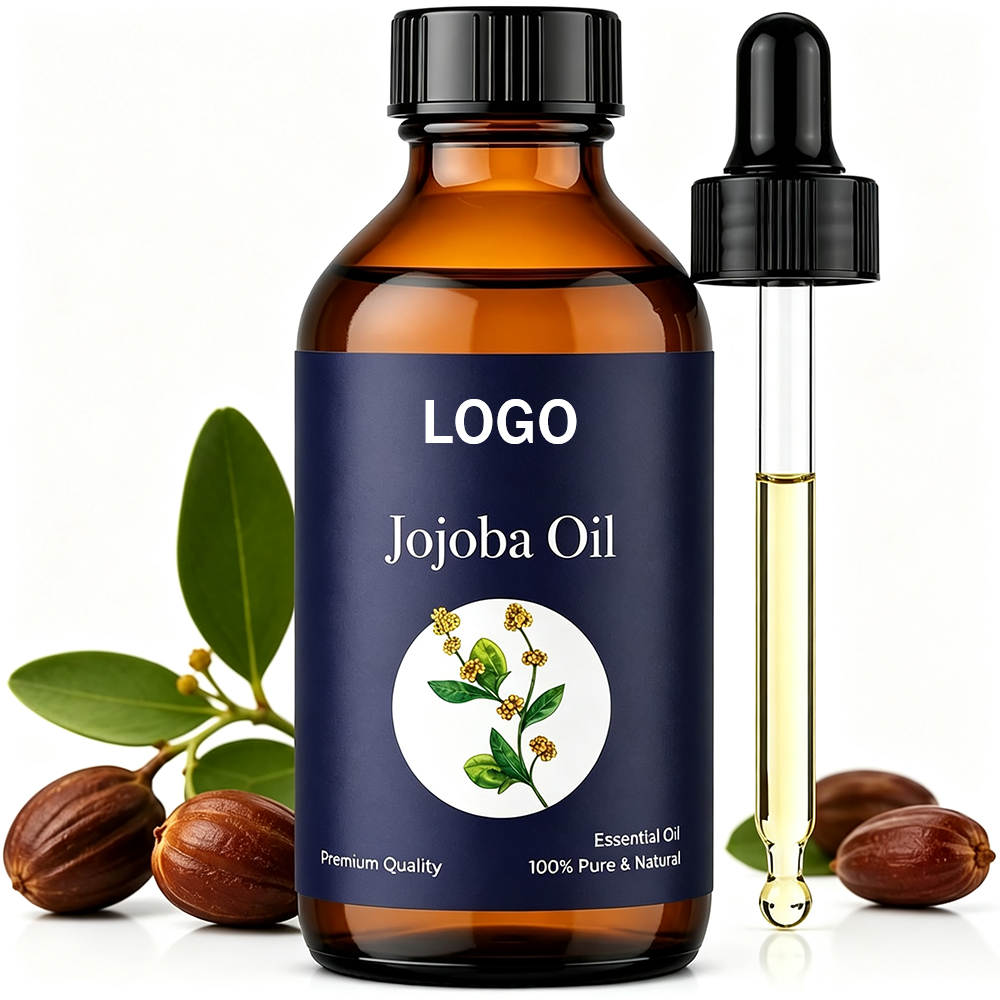
Aromatherapy: A Stable, Low-Scent Base for Essential Oil Blends
In aromatherapy, jojoba oil’s relatively subtle natural aroma and remarkable resistance to oxidation make it an especially reliable carrier oil. It allows the fragrance of essential oils — whether lavender, frankincense, tea tree, or citrus — to remain the focus of the blend. Jojoba’s long shelf life, a direct result of its wax ester composition, ensures that custom blends remain stable over time without the rancidity issues common to triglyceride-based oils.
A simple introductory recipe for a Lavender & Jojoba Skin Comfort Oil calls for 1 ounce (30 mL) of jojoba oil combined with 6 drops of lavender essential oil in a glass bottle — an approximately 1% dilution suitable for everyday use as an aromatic body oil after bathing. For a more complex relaxation massage blend, practitioners may combine jojoba with cedarwood, lavender, vetiver, and ylang ylang essential oils at a 2% total dilution.
“Over time, jojoba is proving that it is ‘here to stay’ in personal care,” said Amber Schwartz, global category leader at Vantage. “With its versatile and efficacious applicability and climate-friendly characteristics, the ingredient is emerging as a long-term active in the sector, rather than a trending ingredient to bolster sustainability claims.”
How to Incorporate Jojoba Oil Into Your Routine
For massage: Warm a small amount of jojoba oil between your palms and apply to the skin using long, flowing strokes. Blend with 2–3% essential oils for a customized therapeutic experience.
For facial skincare: After cleansing, apply 3–5 drops to slightly damp skin and massage gently in upward motions. Jojoba can be used alone or layered under a moisturizer to enhance barrier protection.
For aromatherapy: Combine jojoba with your preferred essential oils at a 1–2% dilution in a glass bottle. Shake well before each use and apply to pulse points, temples, or areas of tension. For a diffuser, add 3–6 drops of a jojoba-diluted essential oil blend to water.
As demand for ingredient-led, sustainably sourced beauty solutions continues to rise, jojoba oil’s unique chemistry — a liquid wax ester that speaks the skin’s own language — positions it not merely as a trend, but as a foundational active for the next generation of personal care.
Mobile:+86-15387961044
Whatsapp: +8618897969621
e-mail: freda@gzzcoil.com
Wechat: +8615387961044
Facebook: 15387961044
Post time: Sep-16-2026