

Osmanthus oil—most often encountered as a solvent-extracted absolute—is gaining recognition for a fragrance that bridges fruity sweetness and floral depth, alongside skin-conditioning properties and a growing evidence base for aromatic calming. As with all concentrated aromatic extracts, dilution and sourcing transparency remain central to its responsible use.
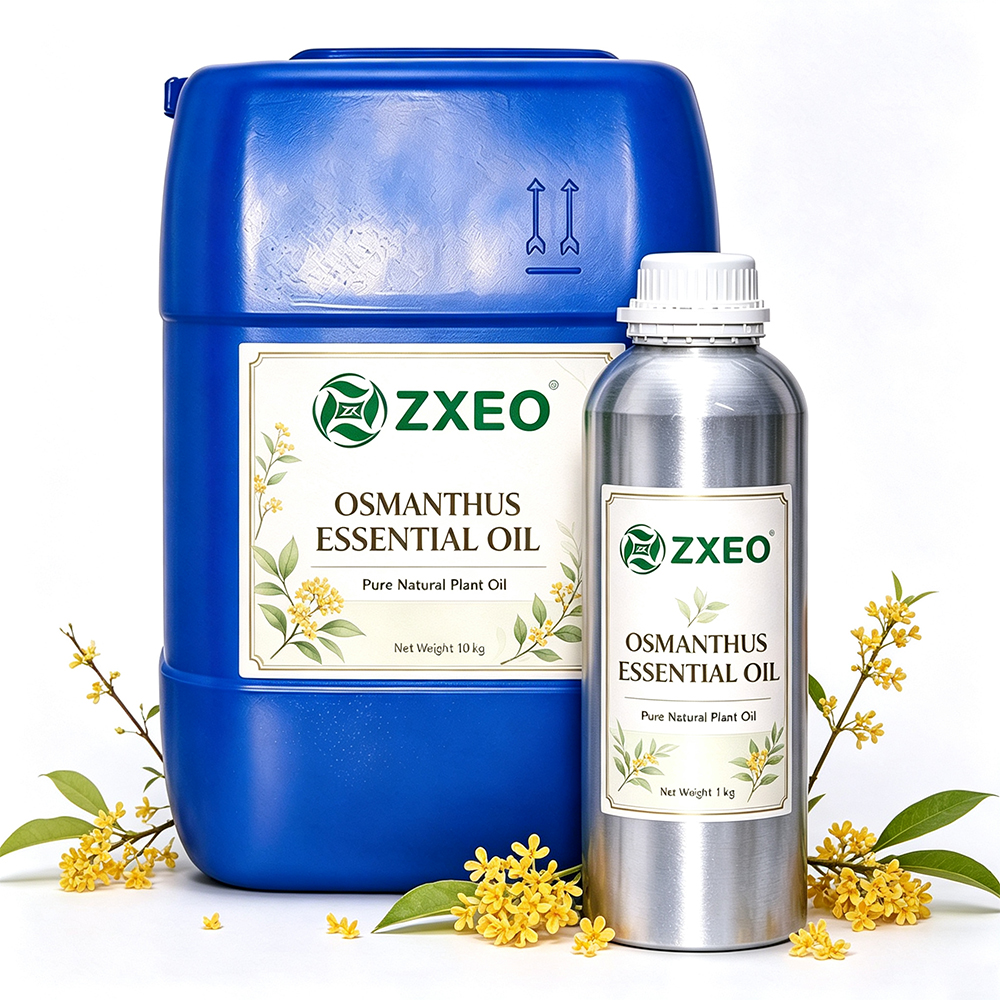
Osmanthus essential oil is obtained from the blossoms of Osmanthus fragrans, an evergreen shrub native to East Asia and known in China as “sweet olive.” The flowers range from silvery-white to golden orange and bloom across spring, summer, and autumn depending on the cultivar. Unlike lavender or cedarwood, osmanthus is rarely produced by steam distillation: the flowers are too delicate and yield too little aromatic material for conventional distillation to be practical. Commercial osmanthus is therefore typically a solvent-extracted absolute, a process that captures the flower’s full aromatic profile—including the honeyed, apricot-like facets that distillation would leave behind. The absolute is rich in linalool oxides, linalool, and ionone compounds—particularly β-ionone, the “rose ketone” that contributes much of its velvety floral-fruity character.
The following sections outline how osmanthus absolute is used in massage, skincare, and aromatherapy, with practical guidance for dilution and application.
Massage: Warmth for Tired Muscles and Tense Moods
In massage practice, osmanthus is valued less for deep tissue work and more for its ability to soften the sensory atmosphere of a treatment. Its scent is simultaneously sweet and slightly smoky—reminiscent of apricots and peaches with a faint peppery undertone—and practitioners describe it as calming without being sedating. Aromatherapy references list it among oils used to ease tension and support emotional balance, and massage therapists often incorporate it into blends for clients who present with both muscular fatigue and a stressed, “wound-up” state.
For massage, osmanthus absolute must be diluted in a carrier oil such as sweet almond, jojoba, or fractionated coconut oil. A widely cited preparation is 3–5 drops per 10 mL of carrier oil, roughly a 1.5–2.5% dilution, massaged gently into areas of tension. Because the absolute is viscous and intensely aromatic, it is often blended with lighter oils—bergamot, mandarin, or a touch of sandalwood—to help it disperse and to round out its fruity-floral profile.
Skincare: Nourishing, Softening, and Balancing
In cosmetic applications, osmanthus absolute is used for its astringent, antimicrobial, and anti-inflammatory properties, alongside a capacity to nourish and soften the skin. Formulators note that it is particularly suited to dry or sensitive skin types, where its soothing qualities can help comfort minor irritation, while its mild astringency makes it useful in preparations intended to refine the appearance of pores and balance excess oil. β-ionone and the oil’s phenolic content are cited as contributors to its antioxidant and skin-brightening potential, though these effects are primarily observed in vitro or in traditional use rather than in large clinical trials.
For facial skincare, a low dilution is essential. A 1% concentration—approximately 5–6 drops per 30 mL of carrier oil or unscented cream—is appropriate for daily use, while 2% may be used for body preparations. A patch test on the inner forearm is advised before first application, and the absolute should be kept away from the eyes and broken skin. Those with sensitive skin may prefer to pair osmanthus with jojoba or rosehip oil, both of which support barrier function without competing with its fragrance.
Aromatherapy: Calm in a Fruit-Floral Register
Osmanthus’s most distinctive contribution to aromatherapy is aromatic rather than pharmacological: it offers a profile that is at once relaxing and gently uplifting, without the heaviness sometimes associated with resinous or woody calming oils. Inhalation of osmanthus has been reported in clinical research to reduce feelings of stress, and a randomized controlled trial found that aromatherapy with Osmanthus fragrans oil significantly attenuated anxiety in patients undergoing colonoscopy compared with a control group. While this does not establish osmanthus as a treatment for anxiety disorders, it supports its traditional use as a supportive aromatic tool in moments of acute nervous tension.
For diffuser use, 3–5 drops in a water-based diffuser is a reasonable starting point; because the absolute is potent, smaller amounts are often sufficient. For a more personal application, 2–3 drops can be added to a bowl of hot water for gentle inhalation, or to a bath when first dispersed in a carrier oil or bath milk. Osmanthus also functions as a fixative in natural perfumery, lending tenacity and warmth to citrus, floral, and chypre accords—a role that reflects its historical standing in fine fragrance.
Mobile:+86-15387961044
Whatsapp: +8618897969621
e-mail: freda@gzzcoil.com
Wechat: +8615387961044
Facebook: 15387961044
Post time: Nov-20-2026