

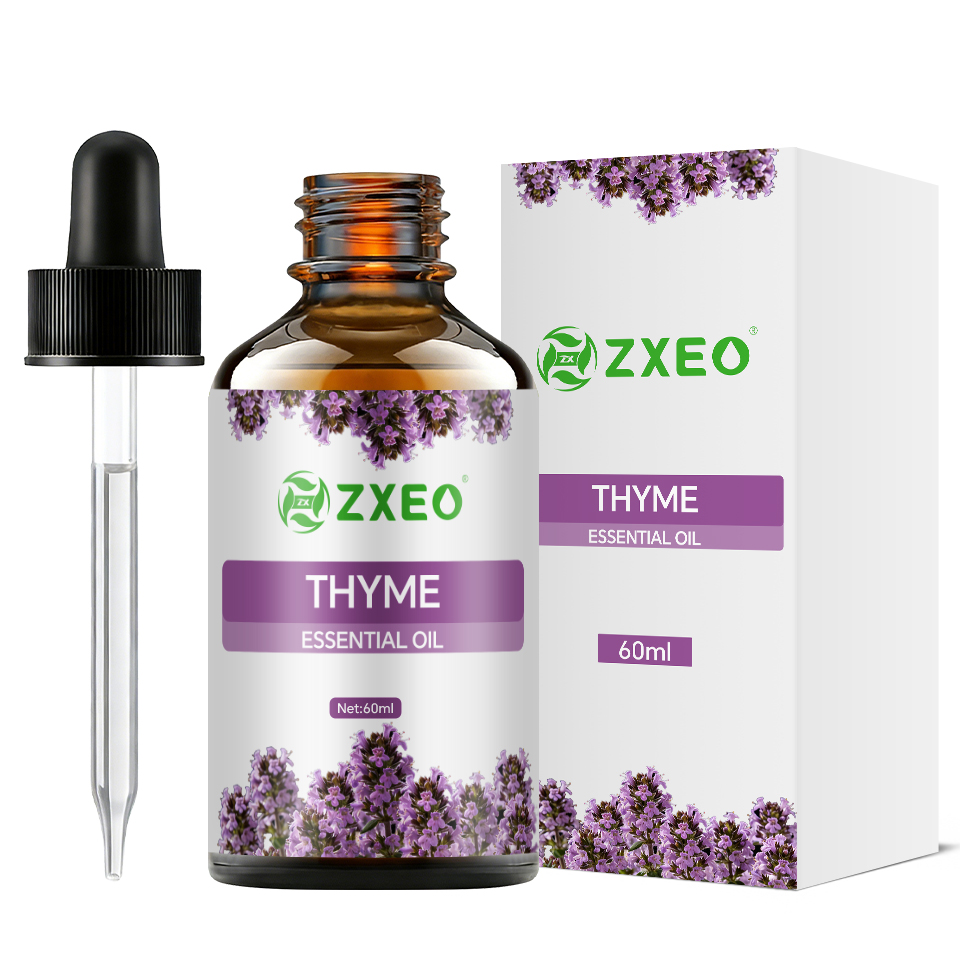
Thyme has small leaves and a strong, pungent aroma. Since ancient Roman times, it has been used to disinfect rooms and preserve meat. Before going into battle, soldiers would even bathe in thyme-infused water to gain courage and strength. Thyme essential oil, extracted from its leaves and flowering tops through steam distillation, carries a powerful, spicy, warm herbal scent.
What is it? The “Herb of Courage” from the Mediterranean
Thyme is a member of the Lamiaceae family, a close relative of rosemary and oregano. Its essential oil has several chemotypes depending on the growing environment. The most common on the market is the thymol chemotype, which has the strongest antibacterial activity but is also the most irritating. The main active components of thyme essential oil include thymol, carvacrol, and p-cymene. These natural molecules give it three core properties: strong antibacterial, immune-boosting, and stimulating.
Its aroma has distinct layers: top notes are sharp, spicy, and herbaceous; middle notes carry a warm woody and earthy scent; base notes leave a dry, slightly bitter finish. If you like herbal essential oils but find rosemary “not strong enough,” thyme essential oil might become your new favorite.
Three main strengths: antibacterial, stimulating, and hair care
1. Natural “antibiotic”: a great helper for home disinfection
Thyme essential oil is best known for its powerful antibacterial ability. Studies have confirmed that it significantly inhibits various pathogenic microorganisms, including Staphylococcus aureus, Escherichia coli, and Candida albicans. You can use it to make a natural disinfectant spray.
2. Stimulating “power bank”: wakes up both the brain and body
The spicy, herbaceous aroma of thyme essential oil directly stimulates the olfactory nerve and the sympathetic nervous system, producing an effect that refreshes the mind and dispels fatigue. Unlike the “coolness” of peppermint, it provides a warm, uplifting sensation – like taking a sip of hot, spicy ginger tea, warming and waking you up from the inside out.
3. Hair care “savior”: a remedy for oily scalp and dandruff
Thyme essential oil is very effective at improving oily scalp, dandruff, and scalp itching. It helps regulate sebum production and inhibits fungi such as Malassezia, which causes dandruff.
One last thought:
Thyme essential oil is not a mild, crowd-pleasing beginner oil. Its scent is strong, its effects are potent, and it comes with quite a few precautions. It’s like a spirited horse – tame it, and it becomes your reliable helper for antibacterial, stimulating, and hair care needs; underestimate it, and it might “hurt” you. If you already have some experience with essential oils and need a true “fighting” antibacterial warrior, thyme essential oil is worth taking seriously.
Email: jasmine@jxqhd.com
WeChat/Mobile: +8617679520868
Whatsapp: +8617679520868
Post time: Apr-28-2026