

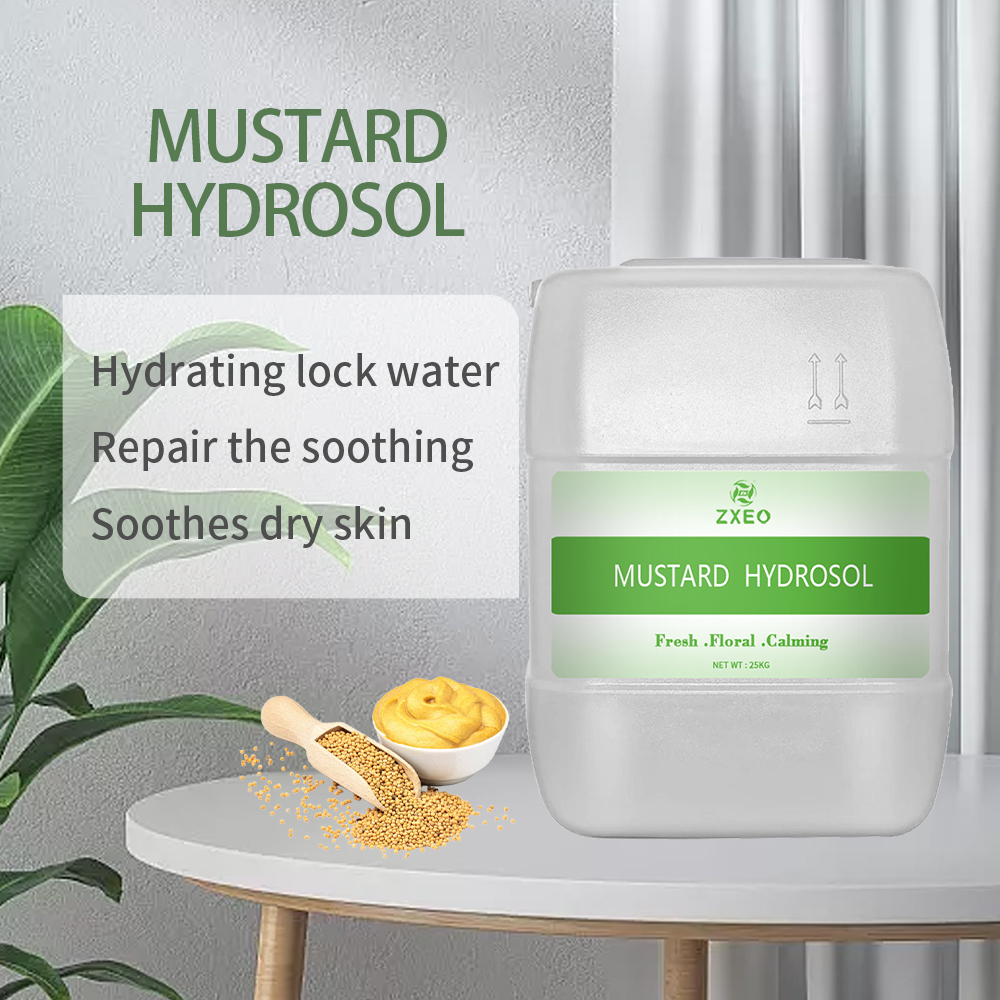
As the global demand for clean-label, plant-based ingredients continues to rise, Mustard Hydrosol is gaining recognition as a multifunctional botanical water with significant applications across personal care, food processing, and natural wellness sectors. Derived from the steam distillation of mustard seeds or leaves, this clear, aromatic distillate offers a mild antimicrobial profile and a characteristic pungent warmth, setting it apart from essential oils and traditional floral waters.
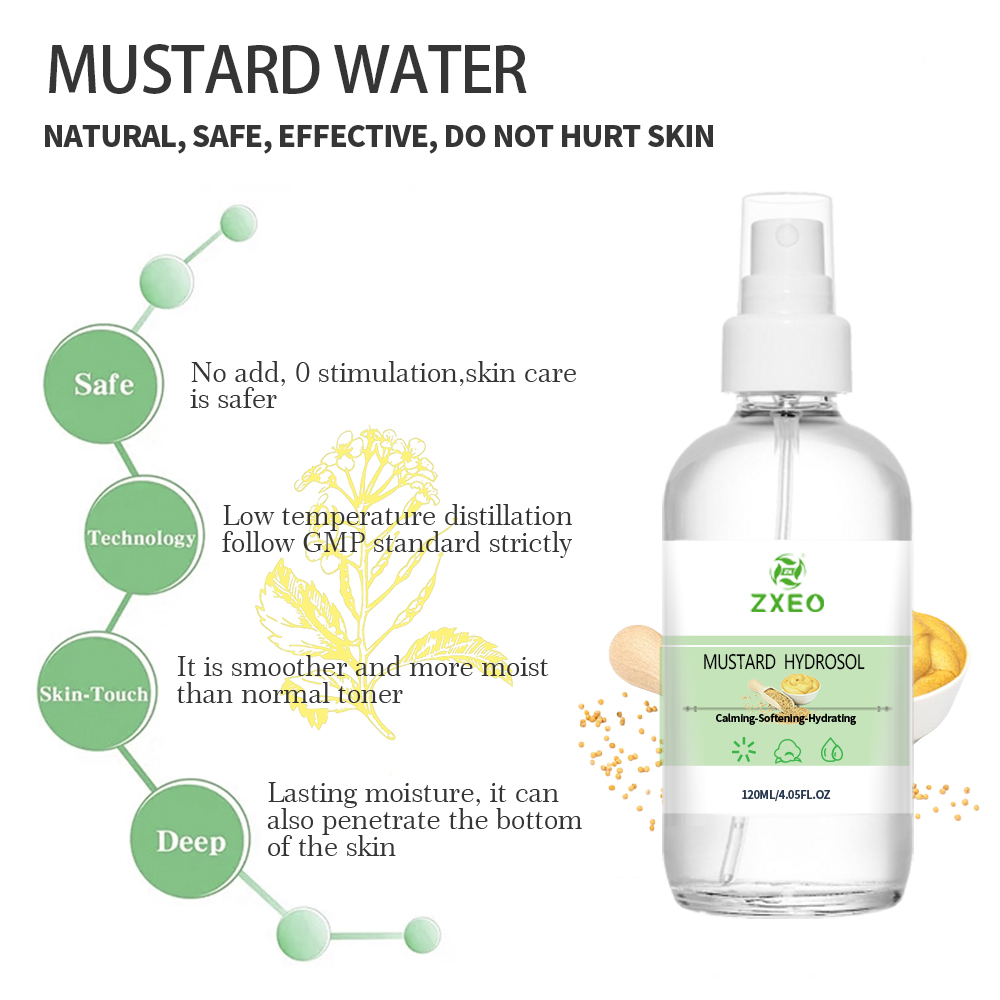
Industry experts point to Mustard Hydrosol’s balanced composition as its key advantage. Unlike concentrated mustard essential oil, which requires careful dilution, the hydrosol contains water-soluble active compounds in lower concentrations, making it suitable for direct use in formulations. In skincare, formulators are incorporating it into toners, cleansing gels, and after-shave products for its alleged sebum-regulating and soothing properties on blemish-prone skin. Preliminary observations also suggest a mild cooling effect followed by a gentle warming sensation, which adds a sensory dimension to cosmetic textures.
In the culinary field, Mustard Hydrosol is being explored as a natural flavor enhancer and preservative. Chefs and product developers value its ability to impart a subtle mustard note without the acidity of vinegar or the graininess of ground seeds. It blends seamlessly into marinades, salad dressings, and emulsion sauces, while its natural antioxidant content may help extend the shelf life of perishable prepared foods when used in conjunction with other preservation methods.
The agricultural sector is also taking notice. Early field trials indicate that diluted Mustard Hydrosol can act as a foliar spray to deter certain pests and fungal pathogens on leafy greens and cruciferous crops, offering a residue-free alternative to synthetic chemicals. This aligns with the broader push toward regenerative agriculture and integrated pest management.
Market analysts project that the global hydrosol market, valued at over USD 500 million in 2025, will see a compound annual growth rate of nearly 8 percent through 2030, with Mustard Hydrosol positioned as a niche but fast-growing segment. Leading suppliers in France, India, and the United States have already begun scaling up production capacity, citing increased orders from organic cosmetic labs and artisanal food manufacturers.
However, industry advisors caution that quality consistency remains a challenge. The chemical profile of Mustard Hydrosol can vary significantly depending on seed variety, distillation temperature, and storage conditions. Producers are therefore urged to standardize parameters such as pH, total phenolic content, and allyl isothiocyanate levels to ensure batch-to-batch reliability.
Regulatory bodies in the European Union and North America currently classify Mustard Hydrosol as a natural ingredient rather than a food additive, which simplifies labeling requirements for finished products. Nonetheless, manufacturers are reminded to conduct skin patch tests for topical applications, as individual sensitivity to glucosinolate derivatives may occur.
Looking ahead, research institutions are investigating the potential of Mustard Hydrosol as a carrier for probiotic cultures and as a base for enzyme-active facial masks. With sustainability at the forefront of consumer choices, the production process itself offers an eco-friendly advantage the spent mustard biomass from distillation can be repurposed as animal feed or organic fertilizer, creating a zero-waste cycle.
For formulators, the message is clear Mustard Hydrosol is no longer a byproduct of essential oil extraction but a star ingredient in its own right. Its combination of functional efficacy, sensory appeal, and environmental compatibility positions it as a compelling option for brands seeking to differentiate themselves in a crowded natural products market.
Businesses interested in sourcing or developing Mustard Hydrosol-based applications are advised to collaborate with distillers who provide full chromatographic analysis and stability data. As consumer education on botanical ingredients grows, the timing appears ripe for this ancient plant distillate to claim its modern place on shelves worldwide.

Post time: Jun-26-2026